TAKASHii: Why He Films in English and Why He Stays in Japan

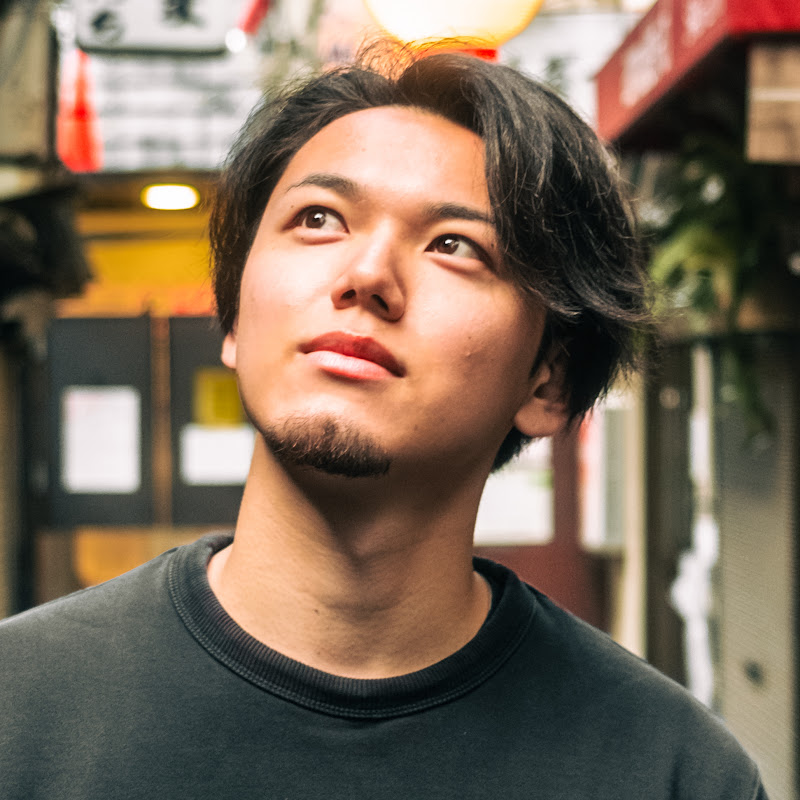
This article is also available in Japanese: Read the Japanese version
There is a Japanese YouTuber who says he isn't well known in Japan, yet whose channel has passed 1 billion views. The channel is called “TAKASHii,” and he says the name as Takashi. He covers Japan in English.
That line about not being well known in Japan is his own, from a show in September 2025. And yet the show's host, who has walked around Shibuya with him, was surprised that foreigners come up to talk to them every time.
For this profile, we went through his interviews, the shows he has appeared on, and his video descriptions and captions. The numbers are as of October 31, 2026, measured by this site through the YouTube API. We checked what's in the videos through auto-generated captions, and what he said on shows is our own summary.
TAKASHii's Profile: Name, Age, and Where He's From
His channel had 2.61 million subscribers as of October 31, 2026, with about 1.05156 billion total views across 900 videos. The introduction in his channel description is a single sentence: “I make videos showing you the Japan that the media fails to capture 🇯🇵”
On the September 2025 show, he gave his following as 2.5 million on YouTube and 1 million each on TikTok and Instagram, 4.5 million in all, and explained that 95% or more of them are foreigners.
As for his name, he appears as 高志 竜哉 in a course on GLOBIS Manabi Hodai, a Japanese online course service. The surname 高志 can be read “Takashi,” so that may be where the name TAKASHii comes from. We did not verify how his name is officially registered, so we present it here as the name shown on the course.
His birth date is August 26, 1999, according to a 2022 TABI LABO article (in Japanese). By our math, that makes him 27 as of October 31, 2026.
The GLOBIS bio says he is from Nagoya, Aichi Prefecture, and graduated from Meiji University. He said much the same himself in a 2023 conversation: he spent 18 years in Nagoya, then moved to Tokyo at 18 for college.
“Still Not Job Hunting in October of Your Senior Year”
It all began with his back against the wall. In a 2023 TABI LABO interview, he put it this way:
“Actually, I wasn't job hunting in college. Still not job hunting in October of your senior year is pretty alarming, right? (laughs)” (translated from the Japanese interview)
By his account, he resolved to be earning from the channel by March, when he was due to graduate, and his target was 150,000 yen a month, the amount he could live on by himself.
According to the conversation mentioned above, he had no money for a good camera at the time, so he shot on an iPhone. He also said that if he didn't make it in time, he figured he'd work at a convenience store starting in March. For about half a year, he says, he never went out drinking or to have fun, and thought only about his videos. Another detail came up: he actually graduated in September, because he had failed to graduate once.
The oldest video still public is “What's it like being a foreigner in Japan?” from October 27, 2021.
In the captions, he says he's in Shibuya and asks four people, from India, Switzerland, Sweden, and India again, about their lives and their visas. It was the COVID period and there were no tourists, so the people he approached were residents of Japan, he recalled on a later show (in Japanese).
The channel itself was created in September 2016, a little over five years before this video. We couldn't find out how it was used in the meantime.
He Learned the Nerve to Approach Strangers in Door-to-Door Sales
He says he owes his ability to talk to strangers on the street to the job he had before YouTube. According to the 2025 Unplugged podcast, he had long worked in sales, selling SoftBank, the Japanese telecom company, door to door.
Even so, he says, the rejections didn't go away as his subscriber count grew. In a separate 2023 conversation, he answered that about 10% to 20% of people agree. On the 2025 Unplugged podcast, he said that when he's approaching Japanese people, there are days he spends all day outside and doesn't get a single video.
Because he isn't well known in Japan, gaining followers doesn't make it any easier. He called that a drawback.
But not being known had another side to it. Working in English keeps his privacy in Japan protected no matter how many followers he gains. He said this was another of his reasons for choosing English.
Where Did He Learn English Without Studying Abroad?
The fact that he didn't study abroad comes up often in descriptions of him. The GLOBIS bio says he has “zero study-abroad experience,” and an article in The Japan Times Alpha wrote in January 2026 that he is not someone who grew up overseas and that his experience abroad had been limited (both translated from the Japanese).
It started with foreign TV dramas. Under his parents' influence, he says, he watched them from elementary school and grew fond of Prison Break. His English grades at school were good, but he says that when he entered college he was about on par with everyone around him.
In college he majored in English and American literature. But the classes were taught in Japanese by Japanese teachers, and he says none of his friends in the department could speak English.
He improved mainly by studying on his own at home. He said he kept watching and listening to English-language movies, podcasts, and YouTube. As for speaking practice, he offered a slightly bold explanation: if you can catch everything people are saying, it isn't all that hard.
What he sees as his strength lies somewhere other than fluency. In the TABI LABO interview, he said that “speaking English with a Japanese accent” is a strength of sorts. In the 2023 conversation where Nagoya came up, his read was that there were videos of British people filming Japan, but few of a Japanese person speaking English to people who want to come to Japan.
The First Wave From Recommendations, Then the Wave of Short Videos
According to the Unplugged podcast, he reached about 100,000 subscribers in three months. The trigger was YouTube's recommendations. He explained that once one video took off, older videos in the same format started getting watched along with it.
View counts from back then aren't preserved. Today's numbers, though, show his 14th video, “What do Japanese Hate about Japan ?”, at about 6.02 million views. It was published on December 29, 2021, about two months after he started, so it may have been the spark. He himself mentioned a 20th video only by way of example, and didn't say which one.
According to the GLOBIS bio, he reached 500,000 subscribers in November 2022. That same month, videos 60 seconds or shorter began to appear in the mix. The next year, 2023, he published 302 videos, the most of any year so far and 3.5 times the 86 he published in 2022.
Of his 900 videos, 605 are 60 seconds or shorter. All 18 videos with more than 10 million views are three minutes or shorter. The most viewed of all is “Half Japanese in Japan” from September 2023, a 41-second video with about 58.33 million views. The most viewed video longer than three minutes is “Things Foreigners Should NEVER Do” from January 2023, with about 8.23 million views. So his top short video has about seven times the views of his top long video.
From Doing Everything Himself to Hiring Help
In January 2023, he told TABI LABO that he carried a tripod and filmed alone, and that he handled everything himself from planning to publishing. He once had someone else edit for him, with this result: “I thought, it would be faster if I did this myself (laughs).” In the October 2023 conversation too, he answered that he did all the editing and filming alone.
The change came in 2024. On the show One Night in Bangkok in October 2024, he said he had recently hired an editor and that it was one of his good decisions that year.
The reason he gave on a show the following year was strikingly simple. One March, he said, editing and filming fell behind and he could no longer put out videos.
He didn't say which year, but lining up the publish dates shows that March 2024 had just one video longer than three minutes, on the 31st. Eighteen videos at three minutes or shorter did come out, so not everything stopped. If he was talking about long videos, this may be the month.
At first he finished half of the editing himself, then gradually cut back his share, and he says the view counts stayed the same. What pushed him, he says, was his American creator friends. He says they told him that nobody his size in America goes without an editor.
As of September 2025, he had a camera operator, an editor, and a manager, though his view was that the smaller the team, the better. Editor credits began appearing in video descriptions with videos from January 2026, and there are 20 so far.
The Hiroshima Episode, Where He Didn't Care About Views
His interview topics range from light ones like dating to discrimination in Japan. In the October 2023 conversation, he named as a favorite the Hiroshima episode, “Interview with an Atomic bomb survivor in Hiroshima,” published on August 6, 2023.
He asks a woman who was 90 at the time, an atomic bomb survivor who tells the story of the bombing, about August 6, 1945. By his account, it was one of the few videos where he didn't care about the views. Videos of atomic bomb survivors were all in Japanese, he says, so he felt that he, with his reach overseas, should make one. He also said that because so many of his viewers are American, he asked only what happened, not how she felt.
Incidentally, one video he has made again and again asks what anime Japanese people watch. The first was his eighth video, and a new one came out as recently as October 20, 2026. Yet in a 2023 conversation, he said he doesn't watch anime himself, so he can't keep the topic going.
On the 2025 show, he said plain interviews had stopped taking off. That is because English-language information about Japan had become so plentiful, he said, and lately much of his work is in documentary style. Videos with titles beginning “Inside” become noticeable from the October 2024 episode on a Tokyo car meet, which has been watched about 5.61 million times.
For another street-interview channel, see also our Ask Japanese article.
How Much Does He Make? Sponsors and His Own Products
We couldn't confirm his annual income. But on the September 2025 show, he talked about what makes up his income in quite specific terms. The four pillars were YouTube ads, sponsors on long videos, sponsors on short videos, and his own products.
He said his sponsors are mainly overseas tourism-related, and that the big ones pass 10 million yen on long-term contracts. On the other hand, he flatly said he will never take online casino offers.
One of his own products is a series of Japan guidebooks: three books, for Tokyo, Kyoto, and Osaka, at $39 each. Another is a beginner Japanese course, sold for $198, with more than four hours of video and more than 200 pages of materials. Both are as listed on October 31, 2026.
As of the same day, the contact information in his channel description used the domain of the talent agency Mipon. However, we could not confirm whether he is signed with them.
He Once Wanted to Live Abroad. Why He Says He Stays in Japan
In 2022, TABI LABO asked him where he wanted to be in 2025, and he answered, “I want to try living abroad!” (translated from the Japanese interview). In the October 2023 conversation too, he said he'd like to live abroad someday, but it didn't have to be now.
So what happened in 2025? He answered on the Unplugged podcast.
He said he had lived in Japan for all of his 26 years and had visited 30 or 40 countries. His work could be done abroad with some ingenuity, but the reason he stays in Japan, he said, isn't that he's Japanese. It's that Japan is a good country even seen from outside. He listed five things: it's safe, the food is good, it's convenient, it's clean, and people are at least basically kind.
Of course, there's no telling whether he will stay in Japan for good. This is how things stood as of the episode's release in September 2025.
On the same show, he also talked about his role. With more people coming to Japan, he wants to reduce friction with locals as much as he can. That's why, he said, he speaks to the people coming to Japan rather than to Japanese people.
Not well known in Japan, he has still kept going in English, and perhaps that's because those were the people he was talking to from the start.